SSP 2026
Our Top Picks
Missed our highly popular Product Experience Workshop at SSP 2026?
In an age of AI, personalization, and rising consumer expectations, joy has become a powerful competitive advantage. This immersive workshop explores how human insight, sensory science, and AI-enabled creativity can create breakthrough product experiences that spark curiosity, build emotional connection and turn products from simply useful into truly unforgettable.
Bring it to your site, book a workshop and inspire your team.
Presented by:
Caitlin McLean - VP of Qualitative Solutions, US
Download the content presented at our Panelist Engagement Workshop at SSP 2026
What does it really take to keep sensory panelists engaged, motivated and delivering high-quality insights? In this collaborative session, MMR Research and The Ohio State University explore the factors influencing panelist engagement across consumer, employee and trained sensory panels. From study design and gamification to recognition, motivation and retention, discover practical strategies for creating more engaging sensory research experiences and improving data quality.
Presented by:
Adrianne Johnson -Sensory Director, MMR Research
Christopher Simons - Professor of Sensory Science, Ohio State University
SSP 2026 Posters
Discover how MMR is combining sensory science, consumer understanding and advanced AI to make sensory driver analysis more accessible. In our presentation, we introduced Sensory AI Drivers+, an innovative approach that predicts consumer liking distributions and identifies sensory drivers using fewer products and smaller sample sizes than traditional preference mapping, helping teams unlock actionable product insights while staying firmly grounded in real consumer and sensory data.

What happens when consumers experience a product without the influence of branding, packaging or claims? Using MMR's AI-powered Sensory Bot™, this study explores how consumers interpret the sensory experience of an unbranded sunscreen, revealing how appearance, aroma and texture shape perceptions of product performance and value. Discover how AI-enabled conversations can uncover deeper connections between sensory experiences, consumer expectations and product innovation.

Is consumer liking enough to predict a product's true potential? MMR challenges traditional product testing metrics with a structured approach that goes beyond overall liking and purchase intent. Drawing on research across multiple product categories, this study introduces Product Potential Rating™, a framework that captures both sensory delight and emotional and functional delivery to provide deeper, more actionable product insights.

How can global businesses ensure consistent, high-quality sensory research across different markets and partners? MMR and Mead Johnson Nutrition present a standardized framework for evaluating the capabilities of external descriptive analysis agencies. Through a case study in Latin America, this research highlights the importance of methodological consistency, panel performance and operational excellence in building reliable global sensory programmes.

Can businesses reduce ingredient costs without compromising the sensory experience? MMR and Bayer Consumer Health investigate how descriptive sensory analysis can support smarter DHA supplier substitution decisions. By uncovering meaningful sensory differences between chemically equivalent ingredients, this research demonstrates how objective sensory data can help balance cost efficiency, product quality and consumer acceptance.

How can sensory science help accelerate product development while reducing formulation challenges? In collaboration with Bayer Consumer Health, MMR explores a statistical best/worst-case framework for understanding the sensory characteristics of DHA oils. Discover how identifying representative sensory profiles can streamline testing, guide formulation strategies and support faster, more confident product development decisions.
EuroSense 2026
Our Top Picks
Missed our highly popular Product Experience Workshop at EuroSense 2026?
In an age of AI, personalization, and rising consumer expectations, joy has become a powerful competitive advantage. This immersive workshop explores how human insight, sensory science, and AI-enabled creativity can create breakthrough product experiences that spark curiosity, build emotional connection and turn products from simply useful into truly unforgettable.
Bring it to your site, book a workshop and inspire your team.
Presented by:
Alice Barker - Global Commercial Director – Qualitative Solutions & Creative
Margaux Ducatillon - Global Sensory Commercial Director
Dr Rachel Smith - Associate Director, Sensory Qual

EuroSense 2026 Posters
Descriptive Analysis (DA) is considered the gold standard in sensory evaluation, providing detailed quantitative insights but requiring significant time, training, and product resources. Qualitative mapping offers a faster, more resource-efficient alternative by using consensus-based product positioning to identify sensory similarities, differences, and key characteristics. This study evaluates whether qualitative mapping can effectively complement or, in certain contexts, replace full descriptive analysis.
A kitchen-journey approach evaluates sensory cues throughout preparation and consumption, offering a more holistic view than traditional sensory evaluation, which assesses products largely in isolation. Using Pilav prepared with two margarines, this study explores what additional sensory insights emerge across the preparation journey and how these observations influence the evaluation of the finished dish.
Many product experience behaviours, such as dunking, sharing and beverage pairing, happen automatically and can be difficult to capture through traditional research. In partnership with pladis, MMR explored how AI-powered video analysis could efficiently turn consumer-generated footage into structured behavioural data, providing deeper insight into real-world sweet snacking occasions and uncovering behaviours consumers may not consciously report.
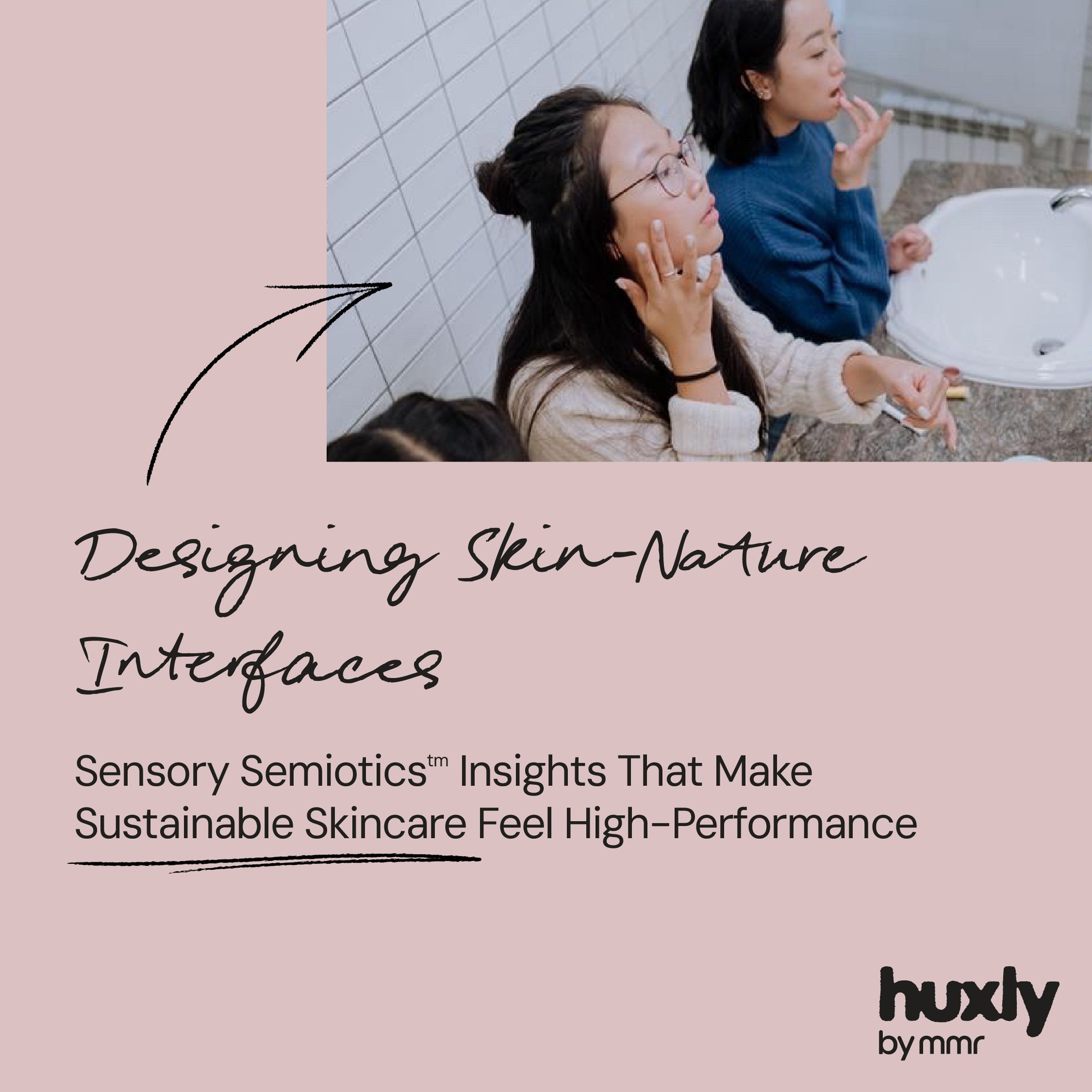
Consumers often perceive sustainable products as less effective, creating a key barrier to environmentally responsible choices. This study explores how skincare narratives from China and Europe combine science and nature, identifying branding metaphors and product formulation opportunities that can challenge this perception and encourage more sustainable consumer behaviours.
Pangborn 2025 Posters
As “clean label” becomes a decisive factor in infant formula choice, this research went beyond claims to define what “clean” truly means to parents. By combining trend analysis, in-home sensory journeys, expert sensory mapping, and co-creation workshops, the team uncovered the sensory, packaging, and emotional cues that most strongly signal “clean.”
For companies with global sensory programs, it is essential to standardize and align sensory methodologies across regions to ensure the reliability and comparability of results. This alignment requires consistent sensory language.
Chemesthetic sensations like cooling, warming, numbing, and tingling are central to the user experience of OTC topical pain relief creams. This study mapped the sensory “journeys” of 10 commercial products using descriptive analysis at seven time points, revealing key differences in sensation intensity, onset, and duration.
In the competitive landscape of consumer goods, uncovering novel product or flavour ideas
requires a deep understanding of consumer insights and emerging trends. The complexity of consumer behaviour, the rapid evolution of preferences, and the limitations of traditional insight processing often result in incremental rather than breakthrough innovations.
This poster explores how the number of trained panelists affects the robustness of sensory data across multiple product categories and levels of product difference. Findings show that while a minimum of eight panelists generally ensures reliable outcomes, the optimal size depends on product similarity, highlighting opportunities to tailor panel sizes for efficiency without compromising data integrity.
This forward-looking work introduces cutting-edge methods reshaping product experience research. From AI-powered personas to virtual moderators, the poster outlines how early signals in technology and consumer behavior can be turned into actionable opportunities. It equips brands with the frameworks and mindsets needed to future-proof their insights in a rapidly evolving landscape.
Yorkshire Tea needed a credible and distinctive way to position its move from hot tea into iced tea. Using Sensory Semiotics™, the team analysed 20 fruit-led drinks to understand category codes, visual styles and cultural associations. Combined with consumer research, the findings identified gaps between expected taste, brand cues and the summer occasion, informing a more cohesive product and packaging direction.
Pangborn 2025 Oral Presentations
Catch up on the presentation "An Essential New Paradigm for Product Development"
At Pangborn 2025, MMR’s founder, David Thomson, set out a new perspective on product development that challenges long-standing assumptions in consumer research.
David's presentation argued for a shift beyond measuring “liking” alone, toward a deeper understanding of the emotional motivations that drive real-world consumer choices.
Presented by:
Prof. David Thomson
Founder & Chairman
MMR Research

Missed our highly popular Product Experience Workshop at Pangborn?
Discover practical steps to create products people crave, and want to feel and share. We showed how to turn moments into momentum: driving trial, talkability and repeat buys.
Bring it to your site, book a workshop and inspire your team.
Presented by:
Caitlin McLean - VP, Head of Qualitative Solutions
Taylor Schad - Senior Sensory Qual Research Manager
Jennifer Brown - Managing Director, AMER
AI-powered sensory chatbots are transforming product research by getting closer to real consumer experiences. Traditional surveys and profiling often miss the depth and nuance of lived product interactions, but Sensory Bot™ bridges this gap by combining domain-specific AI with large-scale qualitative insights.
Presented by Caitlin McLean
Head of Qualitative Solutions (AMER)
Tastes Like Science: Our Sensory Passport
Take a fresh look at Philadelphia through the sensory cues that make products unforgettable. Our PX Menu, created for Pangborn 2025, invites you to explore six iconic Philly spots through the lens of aroma, texture, flavor, and design. From the bold fusion at La Jefa Café to the nuanced complexity of Elixr Coffee, each location was handpicked by our local team for offering standout, sensory-rich experiences. Uncover the sensory signals hiding in every bite and discover Philadelphia’s most unforgettable product experiences.
Curious to explore how sensory science can enhance your own brand?
.png?width=300&height=82&name=Asset%208@4x%20(1).png)
2024/25 Conference Posters
Explore the use of AI to swiftly generate lexicons, helping researchers and product developers identify key sensory descriptors more efficiently.
Discover how conversational AI, combined with behavioral science, can be used to conduct future-oriented concept testing.
Evaluate the performance and consistency of sensory panels across different regions with minimal upfront alignment, developing a cohesive global sensory network.
Discover a new tool for collecting Temporal Check-All-That-Apply (TCATA) data, enhancing the ease and accuracy of capturing dynamic sensory perceptions over time.
This poster details MMR’s efforts in validating global sensory panels, ensuring consistent and reliable data collection across different regions and cultures.
Discover a standardized, live tool developed to assess the competency of sensory panel leaders on a global scale. Drawing from case studies across different regions, providing real-time evaluation of leadership effectiveness in panel management.
Explore the use of an AI-powered sensory chatbot designed to bridge the gap between traditional sensory testing and advanced product insights. By leveraging conversational AI, the chatbot enhances product understanding.
Find out how default to liking bias has insidiously misdirected consumer research and new product development for more than 80 years.
By Prof David Thomson & Toby Coates
This study employed Kraft Heinz trained panellists to refine data quality and align sensory descriptions.
Presentations
Discover how Product Hub is transforming product testing by helping brands adapt to rapidly changing consumer demands. Learn how it balances innovation with core competitiveness, enabling brands to test efficiently and make data-driven decisions.
Explore how AI-powered conversational research is unlocking deep consumer insights with empathy-driven chatbots. This presentation showcases how MMR’s Inca platform fosters genuine engagement, particularly among Gen Z consumers, by combining AI efficiency with human-centric design.
Explore how SurveyBot blends traditional survey metrics with AI-powered probing to create intuitive, engaging conversations. This approach delivers richer insights that uncover how products resonate, what makes them memorable, and how they align with consumer expectations.


.png?width=1080&height=1080&name=A%20Standardized%20Tool%20To%20Evaluate%20Panel%20Leader%20Competencies%20A%20Global%20Case%20Study%20(2).png)

.png?width=1080&height=1080&name=The%20Scourge%20Of%20Defaullt-To-Liking%20Bias%20(3).png)
.png?width=1080&height=1080&name=Optimizing%20%20Sensory%20Evaluation%20%20in%20Industrial%20Contexts%20%20A%20Free%20Sorting%20%20Case%20Study%20(2).png)
.png?width=600&height=600&name=Poster%20covers%20(4).png)